
Like most avid readers, books aren’t just a side-note in my life, a mild but harmless diversion. Instead, books often become the backdrop against which I live my life, the questions facing characters raising themselves in unexpected ways in my own life.

I’ve been thinking a lot lately about this bookish lens. A couple of weeks ago, I read Rebecca Mead’s fascinating, My Life in Middlemarch, a hard-to-classify book that is part biography, part memoir, part literary history–and all about the transformative power of George Eliot’s Middlemarch. In it, Mead describes how reading this book at different times in her life changed the way she saw herself.
I think we’ve all experienced something of the way language transforms our lives, and the lens through which we view ourselves, particularly with scriptures. But I find it happens with other literature too.
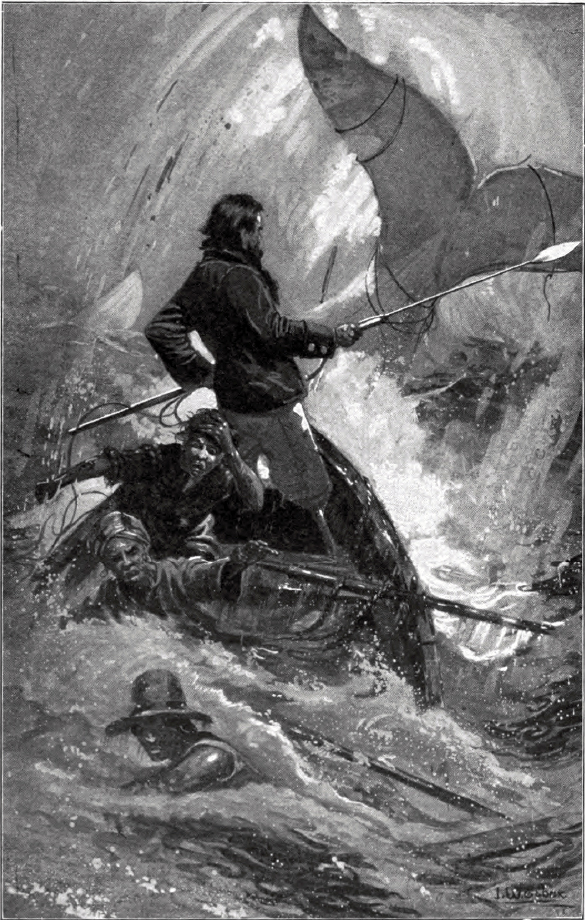
In graduate school, one of my professors told us that she read Moby Dick every year: she could throw herself and her questions at the book and always find answers. Since Moby Dick isn’t my particular poison, I remember being amused by this reaction, until I started paying attention to my own reading habits and found myself doing the same thing. I look for myself in characters, I look for world-views that help illuminate my own.
For me, one of those powerful books was also Middlemarch (I even wrote an honors thesis on it), which drew me to Mead’s book in the first place. I encountered Middlemarch as a sophomore at BYU, in John Bennion’s Nineteenth-century British literature course. Professor Bennion introduced the book by saying, “If I were a BYU bishop–which I’m not–I would make this required reading for all engaged couples.” He didn’t answer the question of whether engaged couples would be willing to plow through a 700+ page novel, but the book’s framing of marriage and courtship (it begins with a marriage in an era when most books ended with them) certainly influenced my own expectations. Eliot’s devastating critique of a courtship whose cobwebbed imaginings could be “pinched into pilulous smallness” has stayed with me for years.
But more than that, Eliot’s story gave me language with which to understand my own moral awakening, which would launch me into the mission field less than a year later. Of the heroine Dorothea (a “modern-day St. Theresa”), Eliot writes:
We are all of us born in moral stupidity, taking the world as an udder to feed our supreme selves: Dorothea had early begun to emerge from that stupidity, but yet it had been easier to her to imagine how she would devote herself to Mr Casaubon [her husband] . . . than to conceive with that distinction which is no longer reflection but feeling–an idea wrought back to the directness of sense, like the solidity of objects–that he had an equivalent centre of self, whence the lights and shadows must always fall with a certain difference.
This idea, that other people have “an equivalent centre of self,” an equally valid but different perspective, has helped me develop empathy as few things have (outside of scripture).
Another pivotal book is Dorothy Sayers’ uncannily prescient Gaudy Night, which I read for the first time in graduate school. This book comes late in the series of her Peter Wimsey mysteries, but it has a heft the others don’t have. In it, Peter’s friend (and love interest) Harriet Vane struggles to solve an unpleasant mystery at her old house in Oxford. But really, she struggles to decide whether or not to accept Peter, and, more critical for me, whether it is possible for a woman to have both a life of the heart and a life of the mind. I had just met the man who would be my husband, and I struggled with cultural expectations that I devote myself to my family opposed to my own academic ambitions. Though Sayers’ wrote her novel in the 1930s, it spoke to me nearly 70 years later. As Harriet worked through her dilemmas, I did too, finding the process both moving and cathartic.
Books do a lot of things: they entertain, they teach, they preach, they puzzle. But the best books help us see ourselves in a different slant of light.
I would love to hear what books have been transformative in your life–and why.
King Lear and Hamlet were very different for me when I read them in my 20s than when I read them in my 50s. Lear was an insufferable man who got what was coming to him. Now I find his two oldest daughters to be unbelievably cruel. Hamlet was awash in existential angst that mirrored my own as a young adult trying to find her path. Now he's clearly having a midlife crisis. When I was in my 20s, I read almost everything Hawthorne wrote. I haven't revisited him lately. I wonder how my view would shift if I did? Oh, and I read Middlemarch in Bennion's class. You post is nudging me to reread it. I just remember the most gross details of plot and character. I am quite sure I missed its richness because I was primarily focused on just plowing through a book of such great length in order to keep to the syllabus. I should read it again, now that I'm an old married lady. It will be a new book!
I first read Charlotte Brontë's Jane Eyre in elementary school. (Looking back, I wonder if I connected with the story so deeply because of Jane's determination to stand up to the bullies in her life.) Each time I've begun reading it since then (and I've read it many, many times) I've wondered, "Will I still like this as much now as I did then?" Each time the answer has been no–I've liked it even better, relating to Jane in new ways. In a time and place with so few options available to women, she set out to chart the course she wanted, seeking fulfillment by being "anxiously engaged in good works." Her unwavering conviction to do the right thing because it was the right thing reminds me that I can (and should), too, "let the consequence follow."
(I've got to admit I enjoy the romance, but I still chide her for opening her heart to one who appeared so indifferent to hers!)
Roslyn…thank you for a wonderful post. Your post helped me realize why my favorite book "The Chosen" by Chaim Potok, holds so much power for me. Over the years I have found myself identifying with Reuven or Danny, depending on the year. There are powerful similarities between orthodox Jews and strictly practicing Mormons — the separation from the world, finding our own testimonies as we separate from our parents, misunderstanding parents, being misunderstood, loving academia, loving God… I treasured Middlemarche as well and still find myself referring to passages! Books are celestial!
For me that book was probably Crossing to Safety by Wallace Stegner. The writing is gorgeous, and I love the story of adult couple friendships. But the thing that makes it a book I come back to reread every few years is the way that Charity is such a cautionary character for me. The first time I read it, I identified with the mild, sweet Sally. But the second time, I saw that I have the real potential to be a Charity– someone who gets things done, sometimes with very little regard to the feelings of others. When I've come back to it, it's been to do a "Charity check," but I also find that the book still resonates with me even though we're no longer in the struggling student/early career phase of life.
Ladislaw is immature and self-centered. Having someone as admirable as Dorothea fall for him is not a story I'd build a courtship manual around.
Oh, I have many books I reread!
"Old Man's War" by John Scalzi, for the maturity of relationships and moral questioning. It also makes me laugh out loud, which is always appreciated.
"The Humans" by Matt Haig, for the struggle to understand others.
"Love Letter of the Angels of Death" by Jennifer Quist, for the depth and tangle of affection and grief.
"A Town Like Alice" by Nevil Shute, for the pain, suffering and purpose.
"The Curse of Chalion" by Lois McMaster Bujold, for the faith and fire.
Stopping now in the interest of length and time, but I do have more. Thanks for the opportunity to think about them (though I've never read Middlemarch).
I have to talk about Jane Eyre too. I first read it when I was 19. When I finished it, I all but slammed it down and declared, "NO ONE'S life is like this!" (Referring to the many trials and difficulties Jane had encountered.) Then I read it ten years later and when I finished it I thought, "EVERYONE'S life is like this." Ha!
I figured out how to read when I was 7 by sounding out the words in my mother's True Story magazines. Then I discovered the public library and Heidi. I was religious about returning the books (did you know there are sequels to Heidi?). I appreciated the clean and direct way her grandfather took care of her and wished I were her.
We moved after that to a town without a library–our house was a tiny wooden one room shack in the old ghost town of Goldfield, Nevada–no library. But someone had left two hard cover books; one was about Dwight Eisenhower and one was about Lafayette. I read both over and over, falling into 8 year old love with Lafayette. He seemed so knightly and he helped America!
All three books had very clear messages on right and wrong behavior and helped guide me. My alcoholic shiftless parents didn't do much of that.
Reading literally saved my life as a child! 🙂
You should! It's well worth re-reading. And I am embarrassed to admit I've never read King Lear in its entirety. I should probably fix that.
I do love Jane Eyre, for many of the reasons you mention here.
Yes, yes they are! 🙂 I love The Chosen, and agree with your points about the similarities. I'm still waiting for the LDS equivalent of that book . . .
I don't think it's just Dorothea. There are lots of marriages and courtships: Dorothea and Casaubon, Dorothea and Ladislaw, Rosamond Vincy and Dr. Lydgate (whose rapid courtship and misconception are, I think, what Dr. Bennion had in mind), and the courtship whose conclusion crowns the novel–and the one I think Eliot intends to embody a real companionate marriage–Fred Vincy and the inimitable Mary Garth.
Though I will agree that Ladislaw doesn't deserve Dorothea.
Kel, seeing your book lists reminds me why I like you so much. I could easily have written about Curse of Chalion, which has been one of my most thought-provoking books on the question of faith (and fate, perhaps).
I love this story! And I love the way our perspectives can change, making a familiar book a totally new experience.
I'm so glad you had books then. Sherman Alexie has said much the same thing about books saving him on the reservation.
I have to praise Jane Eyre, too! She is the greatest heroine in all of literature. Every time I reread it I wonder if it will still be my favorite book and it always is.
I immediately thought of Jane Eyre and I guess I wasn't the only one per the comments. I didn't grow up enjoying to read. Frankly, I didn't read as a child. In middle school, thank goodness I had an author I became enamored with or I probably wouldn't be able to read at all. I always read for personal growth and education. I have decided that daily scripture reading has benefited me in giving me courage to read. If I can read scriptures and sometimes get something out of it, I read other stuff.
You've got me thinking with this one! Marilyn Richardson' s work on Maria Stewart is the easy answer since that was my thesis subject. And each time I return to it I'm both inspired and motivated. Currently I've been wrestling with her treatment of Paul as I've been figuring out my place in ministry as well. The other book is Octavia Butler's Kindred. I was obsessed with it for a while–probably most in moments when I was socially trying to reconcile feeling out of place. But it also spoke to me as a fantasy work at a time when I wasn't sure what it meant to be a Black woman writing. Now I've got to read it again; it has been a few years!