
I stood in the kitchen of my new (to me) townhouse– all mine, and all alone. It was life-giving and very quiet. The duality was not lost on me, but with every new noise and new sight I felt a soft knowing that my new surroundings would also shape my own interior.
Moments later, a honking sound startled me. An uninvited blare cut through the silent clatter, interrupting my thoughts as well as the steady rhythm of my heart.
My mind was going over a list:
Sure I’ll do that.
Yes, I’ll be happy to help.
Oh, you aren’t able to [fill in the blank] anymore, well let me figure something else out.
Okay, when is the deadline? I can make that work.
No one else wants to be on the committee? I know I should be the one to go.
A dissonant to-do list bumped up against my mind as my shallow breath idled and innards contracted. The squawk sounded like an alarm and shook me out of a soft stupor, waking me back to the present moment. Newly resuscitated, I looked out my window to see a gaggle of geese, in all their awkward long neck glory, flying over my house and into the wetland area (I had yet to thoroughly explore) west of my balcony.
I remember this precise moment like a flash-point of stillness– a fixed, snapped memory. Those sneaky paparazzi moments revealing something interesting in an ordinary instant.
***
My students were reading The Kite Runner. A commanding line, “there is a way to be good again” proliferates as the story goes on, which really grabs the students attention—they want to know what that means—how can one be good again? The main character wrestles with a traumatizing event he witnesses as a young child, and what some would call the subsequent mistake that results. It’s interesting to see how year after year these lines resonate with students in an almost prescient way. The need for goodness, for our own redemption.
We read Mary Oliver’s “Wilde Geese” alongside The Kite Runner because, well it’s Mary Oliver, she recently had passed, and I wondered how we could draw the distinction between her first line, “You do not have to be good” to the novel’s refrain, “there is away to be good again.” It’s always an interesting and enlightening when you get teens talking about poetry. It seems to be either amazing or a total fail. They were particularly interested in why she chose geese to “call to you…, harsh and exciting—“.
And now pretend for a moment that you could witness the good parts of high school and insightful youth, and then imagine their remarks. That’s what happened.
Among the ideas and questions shared, I remembered my own wild geese story. Since that one fateful first honk, I have heard lots of “harsh and exciting” geese calls. They’ve become a welcome sound, actually. What once was blaring, is now a sure sign of wildlife, of autonomy, of my a space I now possess. Indeed, harsh and exciting in so many ways.
***
I too have been thinking about what I need to do to be good. For most of my life I think I unconsciously thought goodness was equated to saying yes. To playing the part and checking off the right boxes. It was about what I should do, was supposed to do, what I needed to do.
I’ve now started to equate goodness with curating my life more carefully. I’m so far from perfecting a well-crafted “no, but thank you anyway”, however, the process has begun. And it gained a lot of momentum with deciding to have a space and room of my own.
Brene Brown said to “choose discomfort over resentment”. Do not say yes if it doesn’t serve you. I think at one point in time I may have thought that selfish.
And now, I’m beginning to understand it’s about owning your own soul.
She said always saying yes and people pleasing is “choosing to do for others from less than a pure heart—it’s about trying to manage perception, not really trying to be in service.” So, frankly the opposite of goodness.
***
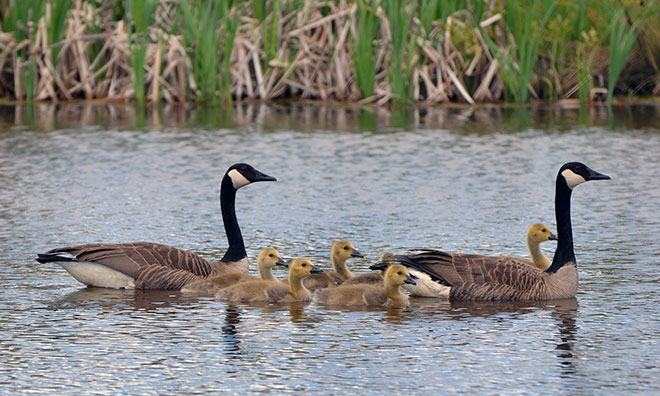
The bright sun came through my window, waking me up Easter morning. I didn’t wake to egg hunts or big family breakfasts, but felt “the soft animal of my body” be enough as I got ready for church. I hurriedly backed out of my driveway, only to notice a parade of newly hatched goslings, wobbling behind their mother, their neon-yellow soft feathers sticking straight up. They didn’t hurry, but looked at the car and went about their call and purpose– finding green grass and water, without apology. The goodness of creation, of birth and rebirth, both harsh, exciting, and promising, waddling right before me. I welcome the sound of wild geese.
This is beautiful and astute and exactly what I needed to read today.
This is so very true. For many years I accepted every assignment in our small ward, often with both my husband and myself on presidencies, a few children under five, a husband working away, feeling completely overwhelmed and resenting it that some people never did their share and I was drowning in doing service for others. Now If I can't do it I just say no, I no longer have guilty feelings for saying it which I did when I began to say no. I feel so much better in life and church. Sometimes there is too much pressure to accept everything and be the good sister.