

Curating Literature and Art in Segullah’s Courtyard: A Critical Introduction
I was lucky enough to combine related passion projects spending two years co-editing Segullah while working towards my MA in English from Weber State University. The following excerpts come from my critical introduction where I outlined the work happening at Segullah and my editorial experiences. To access the thesis in its entirety, including works cited, click here: https://cdm.weber.edu/digital/collection/SMT/id/385/rec/55
There is a place in every library I’ve frequented that feels like home to me. From my spot on the carpeted floor of the elementary school library to a certain rust-orange colored upholstered chair on the top floor of a local public library, the spaces where I have read, studied, and written mattered. I abandoned writing early on and returned to it nearly midlife, grateful to discover a non-physical space in the literary journal, Segullah, that once again, felt like home. Segullah has been providing a home for sixteen years to women artists like me who affiliate with The Church of Jesus Christ of Latter-day Saints and want to express our variety of lifestyles, beliefs, and opinions through our pieces. As current co-editor-in-chief, it is my privilege and challenge to maintain its integrity and grow the journal, publishing content that honors quality in literature and visual arts, as well as promotes artists.
This introduction to my editorial experience at a small journal includes a brief history of Segullah, its purpose and significance, and why its contributors create. I share my experiences as an editor, expounding on challenges and plans for moving forward. Each section features either an excerpt or visual arts piece from Segullah, and links to the journals I’ve edited follow the introduction.
***
Beginnings
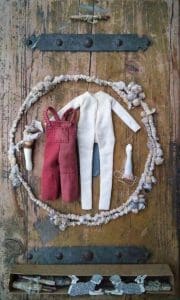
“A Proxy for Hope” collage by Page Turner (Segullah Spring 2021 1st Place Visual Arts)
***
In 2005, a “writer’s group of friends” led by Kathryn Soper, searched for a publication where they might publish work informed by their faith, but that also represented the “richness” of their experiences. They discovered that no publication fit exactly what they hoped, so Segullah was born. It has since grown from a quarterly print journal of essays and poetry to an on-line, multi-platformed literary and visual arts magazine including a weekly blog, monthly podcast, quarterly journal, annual contest, with three published anthologies. The original small group of friends grew to 80+ staff and emeritus members with an intended audience of those who value Mormon arts and letters. The journal’s title, derived from ancient scripture, embodies its spirit: “In Hebrew segullah signifies a cherished personal possession that is set apart and diligently cared for; it is a term the Lord has used with affection to describe His covenant people (Exodus 19:5, Psalms 135:4), and one we use here in remembrance of the blessings and responsibilities we receive in relationship with Him” (Segullah.org/about). Today’s staff aims to preserve the integrity of Segullah’s beginnings sixteen years ago, “diligently car[ing] for” the “cherished” Mormon arts.
Segullah’s Niche
The woman that I am
walks into a room like a sheet ripping in half.
I am awake. Fierce.
I open up like curtains being flung back
to the roaring morning
light…
Excerpt from “The Woman That” by Melonie Cannon (Segullah’s anthology, Seasons of Change)
***
A different literary journal exists for almost every identity convergence imaginable. Staff and contributors at Segullah converge on three points—as women, as believers in the gospel of Jesus Christ, and as artists who strive to create quality poetry, fiction, creative nonfiction, and art. Why does this particular convergence merit a publication all its own? The mission statement explains:
Segullah is a literary journal and blog designed to encourage literary and artistic talent, provoke thought and promote greater understanding and faith among Latter-day Saint women. We publish insightful writings and images which explore life’s richness and complexity while reflecting faithfulness to the gospel of Jesus Christ. Our aim is to highlight a variety of women’s perspectives within a framework of shared beliefs and values. While not an official publication of The Church of Jesus Christ of Latter-day
Saints, Segullah upholds its established leadership, doctrines and standards.
(Segullah.org/about)
Segullah’s brand is informed by the faith of its artists and maintains a space for publishing content with a high level of artistic merit. This combination of faith and artistry is what drew me to Segullah personally. The desire to create pieces that reflect my faith and meet high literary standards propels my work at the journal and motivates me to include others whose pieces fit in this space.
Why We Create
“I took a picture the other day. It has become a still-life vignette of my morning hours. It’s ritualistic at this point and I wonder if the students are as bored of the pre-first-period predictability of it all as I am. The picture is an out-and-out modern siren-call to Rembrandt. Only in that it’s a moment in time as the sun crawls through our windows creating shadows…hoodies taking the place of rich-hued, draped robes. Choreography and lines of bodies positioned and spread out just so. Planned. Spaced. Noted. The intrinsic dance that comes next is in unison and undirected.
Heads slant. Hoodies up. Masks on. Eyes down.”
Excerpt from “On Looking Up” by Jennie LaFortune (Segullah blog post, Feb. 3, 2021)
***
Segullah joins in the Latter-day Saint tradition of celebrating the fine arts. During a 1977 address Church President, Spencer W. Kimball touted this distinction urging the body of the Church to find and champion the artists among us. He added, “We must recognize that excellence and quality are a reflection of how we feel about ourselves and about life and about God” (“The Gospel Vision of the Arts”). In this vein, Segullah’s artists seem compelled by a kind of spiritual driving force to create work worthy of their relationships to self, others, and divinity. Contributors have written and created pieces that indeed reflect their connection to deity. Segullah has also provided a forum for artists to explore the concept of a female God. Heavenly Mother, whose existence is widely accepted among Church membership, rarely receives official Church mention.
Segullah branded itself early on as a community that promotes new talent, too. English professors at Brigham Young University and other schools advertise the annual contest, encouraging and even requiring students to enter. Submitting work has always been free. With a blog, journal, and contest, Segullah offers options for writers to find a fit for their pieces. For these reasons, Segullah has been the first to publish rising talent and has seen many of their contributors succeed inside and outside the Mormon arts community, in both national and international markets.
Staff members at Segullah range from English professors to independent artists with stayat-home parents and office workers in between. Most hail from North America and Australia with a majority living and working in Utah, where Segullah was born. All create literary art with a few working in visual arts mediums, as well. It is a goal among staff members to expand our scope and recruit talent from all over the globe.
What drives us to publish literary and visual arts? All of Segullah’s staff members first wrote or created their own pieces before editing and publishing others’ work. Crafting an essay or designing a collage is often a solitary labor, but most artists create with an audience in mind. We mean to speak to someone with our work. Indeed, it seems writers and artists want to share; mere expression often fails to satiate creativity’s hunger. In this way, art is social. Literary journals furnish unique spaces for socializing. Matthew Philpotts explains that the literary periodical “…exists not only as a literary-aesthetic text and a material product, but also a sociocultural institution” (41). Literary journals like Segullah serve as courtyards of sorts, where artists wander in and out commingling ideas—even creating cultures.
Editorial Experiences
…contrite spirit
kneeling hands
form a bowl begging,
open for
grace like
medicine
down throat
coats—
binding cracks,
healing slices
forming membrane over
rawness
saving this
broken
offering
for you.
Excerpt from “Broken Offering” by Sherilyn Fuhriman (Segullah Winter 2018 Journal)
***
I accepted a position as co-editor-in-chief at Segullah in the summer of 2019 for my own professional development, to assist in a work I value, and with this project in mind. During my first year, I was mentored by a co-editor who worked with another editor the previous year. This method of training and mentorship is new to Segullah with the two editors prior to me. The merits of this system include sharing in workload, training, and collaboration regarding administrative and artistic aspects of running the publication. Most of all, it improves the chances for continued publication during staff transitions. Workloads tend to be unequal which could be attributed to the voluntary nature of the position. None of Segullah’s staff has ever been paid.
Reasons to invest time and energy run the intrinsic/extrinsic spectrum, and most staff work, raise families, and participate in other projects, all while writing or creating their own art. I came to Segullah without any editorial experience. Preparation for my editorial post included having my own work being edited by Segullah staff members, helping with staff projects, participating in graduate workshops and classes through the MENG program at Weber State University, and my supervisory position in state government. I expected a heavy workload, and I was right—squeezing in emails responses on a break at work, late nights fumbling over formatting, compiling a list of improvements to make to the site, sorting through submissions, planning retreats, and networking at conferences—there is always more to do. Though, for me, the rewards in publishing a journal like the recent contest issue transcend the work and frustrations. I recognize the value in what Segullah produces—its contributions to Mormon literature and arts, and I am proud to be associated.
The challenges that come with leading Segullah vary. The organization’s established reputation, clear mission, and schedule provide a foundation for a successful product. And yet, without steady submissions, staff efforts, and funding, there is no product. The ongoing pandemic has presented a new set of issues. Most noticeably, COVID-related deaths, illnesses, and fatigue reduced staff members’ capacity for contribution. 2020 was the first year since my involvement we did not hold an annual staff retreat. Since we typically review the year prior and plan the upcoming, these tasks were instead accomplished via email and phone and with far fewer staff members. In addition to those challenges, a once vibrant staff comment page on the previous blog has not been revitalized since the new website design several years ago. Fewer staff members are engaging on our private staff Facebook page where we discuss the business of the journal and sometimes even our personal lives.
And yet, some still wrote blog posts, we published a journal each quarter, and held the annual contest. Owing to the declining participation due to the pandemic, when my co-editor and I brainstormed themes for the 2020 contest, we knew we wanted to explore how people are coping. We settled on “Brightness of Hope” (Book of Mormon, 2 Nephi 31.20) after a Book of Mormon scripture. We were pleasantly surprised to receive an average number of entries (compared to the past five years) with an especially rich crop of publishable poetry. These successes indicate an ongoing relevance of the journal and ongoing interest.
The website has averaged 6,572 views per month in the past year with a few blog posts over the past five years reaching viral status. Readership of the daily blog has gradually declined over the past eight years, and it might be because trends in blogging have changed, and Segullah blog has not. Bloggers are spending more time and writing longer posts, blogging less frequently, and utilizing multi-media (Blog Tyrant, “The Latest Blogging Trends and Statistics For 2021”). Months where the journal is published typically garner more views, with the contest issue drawing in the largest number of readers. It is clear that if Segullah wants to maintain or grow its audience, it must produce fresh content regularly.
Funding the journal poses another challenge. It requires money to run some aspects of the organization including website creation and maintenance, tech support, submission file storage fees, contest prizes, occasional promotional materials, and advance copies of published books. Without revenue, Segullah relies on donors. Over the years, staff members have kept the journal afloat, often with their own money. In the past several years, the journal has enjoyed the support of anonymous donors, family members, and the Eugene England Foundation which funds the annual contest prize money. Editors and staff members have discussed various fundraising possibilities and even attempted a few, such as a calendar with the year’s published artwork, without much success.
Since its complete online overhaul in 2016, Segullah runs on a WordPress site. We keep one computer technician on staff who volunteers some of her time and bills Segullah for larger projects. (No other staff member receives payment.) In addition to finding, selecting, and editing content for the journal, editors must navigate the website to format, publish, and promote. We learn these technical skills on-the-job and without training. This poses time constraints with an occasional sacrifice of quality. Minor errors are regularly corrected post-publication.
Lack of racial diversity poses another challenge at Segullah. We belong to a global Church, read literature and experience art from all over the world, and yet, we remain Utahcentric and mostly white. Two other editors and I have tried to remedy this deficit without success for the past four years. Our attempts to recruit staff by word of mouth and networking fail to yield results. (Though, in the past three years, more of our contest entrants and winners did identify as people of color.) If we claim to be a voice for women’s experiences in the Church, we fall short by failing to represent all voices. We are missing the richness available from inclusion.
Conclusion

“Giraffe” by Linda Hoffman Kimball (Segullah Spring 2021)
***
Managing a small literary and arts journal feels cyclical beyond the publication schedule. We need staff to manage submissions and create content. Quality content encourages readership. Readership stimulates referrals which lead to more submissions and staff retention. And so on.
Experiencing the cycle as an editor has afforded me a vision for what Segullah is and what it can become. Segullah’s strengths drive its sustainability and relevance in the Mormon arts community. We identify as faithful women who want to create art that reflects our lives and our relationship with deity. We offer our pieces as gifts. Long-time staff member, Karen Austin, blogged: Somehow, we find the courage to place a gift on a holy altar, a gift that will always fall short but that our Heavenly Parents will graciously accept as we strive to become more divine ourselves. For even the Son of God had no real use for the fine gifts the magi brought, but those gifts were accepted, and the magi blessed for their willingness to strive in order to encounter the divine. (Segullah.org) With an established brand and consistent content Segullah accommodates the artists and audience drawn to its courtyard. It is home for some and has room for more.
